



A Distributor’s Guide to Sourcing the Right Solar Inverter Types in 2026
- What Are the Main Types of Solar Inverters?
- Quick Summary: Key Takeaways for Distributors
- Data Comparison Table: Inverter Types for B2B Sourcing
- Deep Dive: The 4 Primary Types of Solar Inverters
- 1. String Inverters (Central Inverters)
- 2. Microinverters
- 3. Power Optimizers (A Hybrid MLPE Approach)
- 4. Hybrid (Multimode) Inverters
- Commercial vs. Residential: Sourcing for Different Markets
- Expert Tips & Common Sourcing Mistakes
- Securing Your Supply Chain with Guangzhou Congsin Electronic Technology Co., Ltd.
- Conclusion & Call to Action
- Frequently Asked Questions (FAQ)
- What is the most reliable type of solar inverter for commercial use?
- How do power optimizers differ from microinverters?
- Are hybrid solar inverters worth the higher wholesale cost?
- What is the average lifespan of a string inverter versus a microinverter?
- Which inverter type is best for partially shaded solar arrays?
- How does NEC 2020 affect solar inverter sourcing?
- What are the key warranty factors distributors should look for in inverters?
- Can grid-tied inverters work during a power outage?
What Are the Main Types of Solar Inverters?

A solar inverter is a critical device that converts direct current (DC) electricity generated by solar panels into usable alternating current (AC) for grids or properties. The four primary Types of Solar Inverters are string inverters, microinverters, power optimizers, and hybrid inverters, each serving distinct efficiency, scaling, and pricing needs.
For distributors, wholesale buyers, and procurement managers, understanding the nuances of these technologies is the foundation of a profitable inventory strategy. The solar industry is evolving rapidly, and the demand curve has shifted dramatically toward smart, grid-interactive, and safety-compliant hardware. Failing to stock the correct inverter types can lead to dead inventory, missed sales opportunities, and frustrated installer networks. By grasping how each inverter type functions—from centralized DC-to-AC conversion to distributed panel-level optimization—distributors can perfectly align their procurement strategies with the specific needs of residential, commercial, and utility-scale solar installers.
Quick Summary: Key Takeaways for Distributors

Sourcing the right solar inverter types requires balancing upfront wholesale costs with long-term reliability and market demand. String inverters offer volume economics, MLPEs drive higher margins for complex roofs, and hybrid inverters are experiencing massive growth as battery storage becomes standard in 2026.
To navigate the Solar Supply Chain 2026 effectively, wholesale buyers should keep the following trends and procurement strategies in mind:
- Volume vs. Margin: String inverters remain the most cost-effective bulk option for large-scale, unshaded commercial installations, driving high-volume sales with lower individual margins.
- Premium Resale: Microinverters and power optimizers command higher retail prices, driving robust distributor margins. They are absolutely essential for complex, multi-angled residential roof layouts.
- Storage Integration: Hybrid inverters are experiencing massive demand growth. As grid instability increases, installers now expect battery-ready systems as a standard offering.
- Warranty Backing: Sourcing decisions must balance upfront wholesale costs with long-term manufacturer warranty backing and Return Merchandise Authorization (RMA) efficiency. A cheap inverter is never cheap if it requires constant replacements.
Data Comparison Table: Inverter Types for B2B Sourcing

This comparison table evaluates string, micro, optimizer, and hybrid inverters across wholesale cost, warranty length, margin potential, and ideal applications. Procurement teams must use these metrics to identify the most profitable and reliable technologies for their specific installer base.
| Inverter Technology | Average Wholesale Cost per Watt | Typical Warranty Length | Distributor Margin Potential | Ideal Application Focus |
|---|---|---|---|---|
| String Inverters | Low ($0.08 - $0.12) | 10 - 15 Years | Low to Medium (Volume Driven) | Unshaded Commercial & Utility |
| Microinverters | High ($0.25 - $0.35) | 25 Years | High (Premium Pricing) | Complex Residential Roofs |
| Power Optimizers | Medium ($0.15 - $0.20) | 12 - 25 Years | Medium to High | Mixed Residential & Light Commercial |
| Hybrid Inverters | Medium-High ($0.18 - $0.28) | 10 - 15 Years | High (Battery Upsell) | Residential Storage & Off-Grid |
When evaluating Wholesale Solar Inverters, this data highlights why a diversified portfolio is critical. You cannot service a high-end residential installer focused on premium home integrations with the same hardware you sell to a utility-scale developer focused purely on the lowest Levelized Cost of Energy (LCOE).
Deep Dive: The 4 Primary Types of Solar Inverters
The four primary inverter technologies include traditional central string inverters, distributed microinverters, hybrid multimode units, and power optimizers. Each technology offers unique advantages in cost, efficiency, and scalability, directly impacting a distributor’s inventory strategy and installer satisfaction.
1. String Inverters (Central Inverters)
String inverters represent the traditional, centralized standard for solar energy conversion. In this setup, multiple solar panels are wired together in a series (a "string"), and the combined high-voltage DC power is sent to a single, centralized inverter unit.
- Pros: Highly cost-effective, proven long-term reliability, and simple installation for large, unobstructed sites.
- Cons: If one panel is shaded or soiled, the power output of the entire string drops to the level of the lowest-performing panel.
- B2B Angle: Ideal for budget-conscious sourcing and commercial projects. Distributors should stock these in high volumes for utility-scale clients.
2. Microinverters
Microinverters provide distributed, panel-level inversion by attaching a small inverter directly to the back of each individual solar panel, converting DC to AC on the roof.
- Pros: Completely eliminates the shading bottleneck, allows for seamless system expansion, and offers granular, panel-level monitoring.
- Cons: Higher upfront wholesale cost and more complex rooftop maintenance if a unit fails.
- B2B Angle: Highly sought after by residential installers. While they require a larger upfront capital investment from distributors, they offer exceptionally strong profit margins.
3. Power Optimizers (A Hybrid MLPE Approach)
Power optimizers offer a strategic middle ground. They are installed at the panel level to "condition" and maximize the DC power output, which is then sent down to a central string inverter for the final AC conversion.
- Pros: Balances the cost-efficiency of string inverters with the shading mitigation and monitoring capabilities of microinverters.
- Cons: Introduces more hardware points of failure than a pure string system.
- B2B Angle: A highly popular choice for installers looking for premium performance without the top-tier price tag of microinverters.
4. Hybrid (Multimode) Inverters
Hybrid inverters are advanced, battery-ready units that intelligently manage power routing between the solar panels, the local utility grid, and local energy storage systems (batteries).
- Pros: Future-proofs installations for battery additions and provides seamless backup power capabilities during grid outages.
- Cons: Heavier units with a more complex commissioning and programming process.
- B2B Angle: The demand for Hybrid Inverters B2B is skyrocketing globally. Distributors must stock these to capture the rapidly growing energy storage market. Understanding the technical nuances between a Hybrid vs off grid solar inverter is essential for maximizing margins and advising your installer network correctly in this category.
Commercial vs. Residential: Sourcing for Different Markets
Residential sourcing prioritizes module-level power electronics (MLPE) and hybrid units for home energy storage and rapid shutdown compliance. Conversely, commercial and utility-scale sourcing requires high-capacity 1000V to 1500V central inverters capable of handling massive loads with maximum uptime.
Residential Market Sourcing: The residential sector is heavily driven by strict safety codes, roof aesthetics, and consumer demand for smart home integration. Module-Level Power Electronics (MLPE), which includes microinverters and power optimizers, are practically mandatory in many jurisdictions to meet modern fire safety standards. Homeowners also increasingly demand battery backup for grid independence, making hybrid units a staple in any residential distributor's warehouse.
Commercial Market Sourcing: Commercial Solar Inverter Sourcing is a completely different landscape governed by raw economics and scale. Procurement managers must focus on heavy-duty, high-voltage equipment. Large-scale installations prioritize lower costs per watt and rugged reliability over granular panel-level monitoring. Partnering with a reliable Low frequency solar inverter manufacturer is often critical for industrial applications requiring high surge capacities, transformer-based isolation, and robust build quality that can withstand harsh environmental conditions.
Expert Tips & Common Sourcing Mistakes
Avoiding common sourcing mistakes, such as ignoring NEC rapid shutdown compliance or overlooking RMA processes, protects your bottom line. Distributors must prioritize manufacturers offering robust warranties, remote monitoring capabilities, and diverse hybrid inverter stock to ensure long-term profitability.
Mistake 1: Ignoring NEC Rapid Shutdown Compliance One of the most costly mistakes a North American distributor can make is holding inventory that cannot be legally installed. The National Fire Protection Association (NFPA) mandates strict rapid shutdown capabilities under the National Electrical Code (NEC) 2020/2023. This requires rooftop conductors to de-energize to safe voltage levels (under 80V) within 30 seconds to protect first responders during a fire. Sourcing non-compliant string inverters without pairing them with proper shutdown devices will inevitably lead to unsellable dead stock.
Mistake 2: Overlooking the Manufacturer's RMA Process Sourcing solely based on the lowest cost per watt is a dangerous trap. According to reliability data from the National Renewable Energy Laboratory (NREL), inverters are historically the leading cause of solar system maintenance events and truck rolls. If your manufacturing partner has a slow, combative, or overly complex Return Merchandise Authorization (RMA) process, your installers will bear the cost of extended system downtime. This friction will ultimately damage your reputation as a reliable distributor.
Expert Tips for 2026 Procurement:
- Prioritize Remote Monitoring: Installers heavily favor brands that offer sophisticated, cloud-based remote system monitoring. The ability to diagnose a fault remotely drastically reduces expensive truck rolls, saving installers thousands of dollars annually.
- Diversify Battery Compatibility: Ensure your hybrid inverter stock is universally compatible with major lithium-ion battery brands (such as Tesla, Enphase, Pylontech, and BYD) to give your installers maximum design flexibility.
Securing Your Supply Chain with Guangzhou Congsin Electronic Technology Co., Ltd.
Navigating global supply chain volatility requires an experienced procurement partner with established manufacturer relationships. Guangzhou Congsin Electronic Technology Co., Ltd. provides rigorous QA testing, predictable lead times, and competitive wholesale pricing to protect your installation timelines and profit margins.
Founded in early 1998, Guangzhou Congsin Electronic Technology Co., Ltd. brings over 27 years of focused, specialized experience to the power electronics industry. As a professional power inverter manufacturer, we operate fully automated production lines and utilize advanced multifunctional testing equipment to ensure every unit meets the highest global standards of reliability, efficiency, and intelligent functionality.
Our commitment to quality is deeply embedded in our operations, backed by our ISO9001 certification. Our extensive catalog of over 100 power solution models holds stringent international approvals, including CE, EMC, LVD, ETL, FCC, RoHS, and E-MARK. Whether you are supplying independent residential installers, RV/marine outfitters, or large-scale commercial developers, our rigorous QA testing and independently developed patents ensure you are distributing top-tier, failure-resistant technology.
Furthermore, we understand that modern distributors need agility and brand differentiation. That is exactly why we offer comprehensive OEM Solar Inverter solutions, private labeling, and bespoke customization to meet your exact market specifications. Partnering with a deeply experienced manufacturer stabilizes your inventory pipeline against global disruptions, ensuring you always have the right products at the right time.
Conclusion & Call to Action
Stocking the right mix of string, micro, optimizer, and hybrid inverters is essential for meeting installer demand and maximizing B2B margins in 2026. Aligning your procurement strategy with technological trends positions your distribution business as a trusted industry leader.
By understanding the distinct advantages of MLPE for residential roofs and the raw power of central inverters for commercial arrays, distributors can optimize their purchasing decisions. Factor in strict safety regulations, the surging demand for energy storage, and the necessity of reliable manufacturer warranties, and the path to wholesale profitability becomes clear. Elevating your inventory with high-quality, compliant hardware is the ultimate key to capturing market share in the booming renewable energy sector.
Contact Guangzhou Congsin Electronic Technology Co., Ltd. today to discuss your specific needs.
Frequently Asked Questions (FAQ)
What is the most reliable type of solar inverter for commercial use?
For large-scale commercial use, robust string inverters and heavy-duty central inverters from tier-1 manufacturers are typically the most reliable due to fewer points of failure and mature technology.
How do power optimizers differ from microinverters?
Microinverters convert DC to AC power directly at the solar panel. Power optimizers only 'condition' the DC power at the panel level, sending it to a central string inverter for the actual DC-to-AC conversion.
Are hybrid solar inverters worth the higher wholesale cost?
Yes, as battery storage adoption increases, stocking hybrid inverters future-proofs installations, making them highly desirable for installers and yielding better margins for distributors.
What is the average lifespan of a string inverter versus a microinverter?
String inverters typically last 10 to 15 years and may need replacement once during a solar system's life, whereas microinverters often come with 25-year warranties matching the lifespan of the solar panels.
Which inverter type is best for partially shaded solar arrays?
Microinverters and power optimizers (MLPEs) are the best choices for shaded arrays, as they allow unshaded panels to operate at maximum efficiency independently of the shaded ones.
How does NEC 2020 affect solar inverter sourcing?
NEC 2020 (and later) mandates strict rapid shutdown capabilities for rooftop solar. Distributors must source MLPEs or string inverters paired with compliant rapid shutdown devices to meet code.
What are the key warranty factors distributors should look for in inverters?
Distributors should evaluate the warranty duration (standard 10-25 years), labor reimbursement policies, shipping coverage for replacements, and the manufacturer's financial bankability.
Can grid-tied inverters work during a power outage?
Standard grid-tied string and microinverters will automatically shut down during an outage for safety. Only hybrid inverters paired with battery storage or specific grid-forming microinverters can provide backup power.


Distributor
How long does it take to become an authorized distributor?
The process typically takes 2-4 weeks, depending on the discussion and agreement finalization.
Modified Sine Wave Inverters
How does the UPS function of this inverter work?
When the external power supply is normal, the inverter powers the device while charging the battery; when the external power supply is interrupted, it automatically switches to battery power to ensure uninterrupted operation of the device.
Which region’s voltage standards does it support?
It defaults to AC 220V output, suitable for regions with 220V voltage standards such as China and Europe; it can also be customized to output AC 110V, suitable for regions with 110V voltage standards such as the United States and Japan.
Can 4 USB ports fast charge at the same time?
Yes, 4 USB ports can fast charge mobile phones, tablets and other devices at the same time, meeting the needs of simultaneous charging of multiple devices.
Is the cooling fan noisy during operation?
The noise is low (≤45 decibels, equivalent to normal conversation volume). The fan uses a silent motor and automatically adjusts the speed according to the device temperature (low-speed operation when temperature <40℃, high-speed operation when >60℃), balancing heat dissipation and noise.
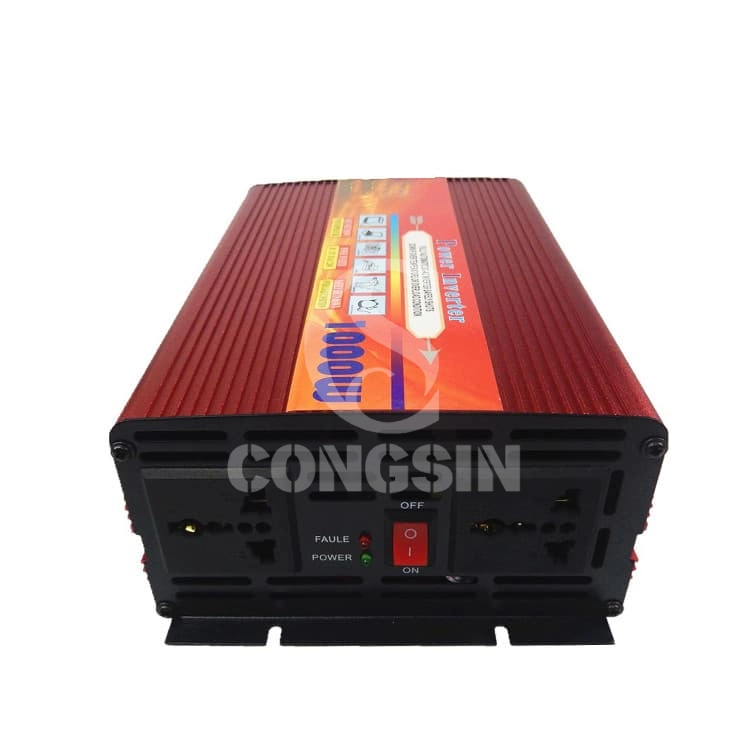
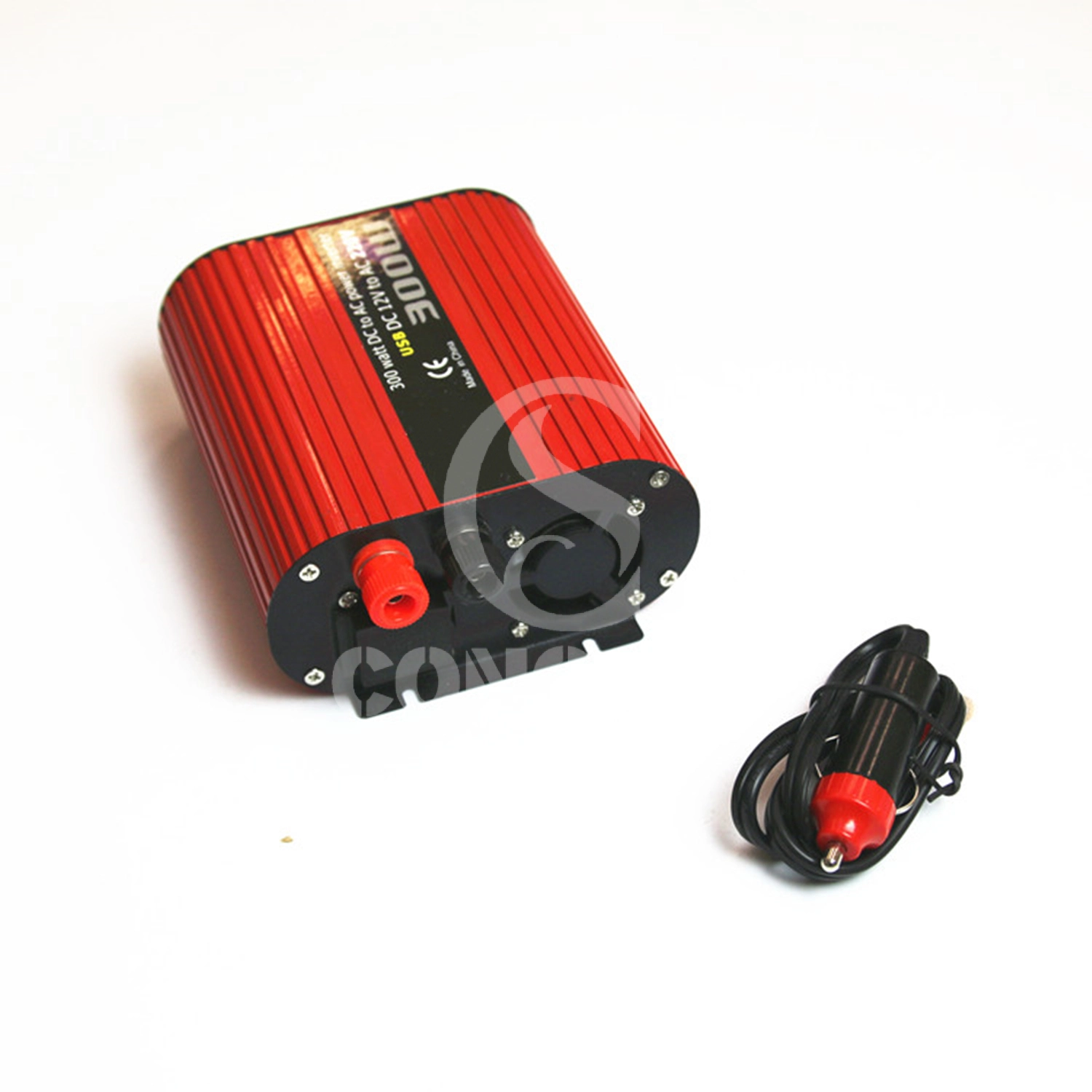
Congsin's Portable 150W Modified Sine Wave Inverter powers your journey! This versatile Car Power Inverter with USB acts as a reliable 12V to 220V converter, ensuring an essential off-grid power supply. With dual USB ports and a universal socket, enjoy convenient power on the go.
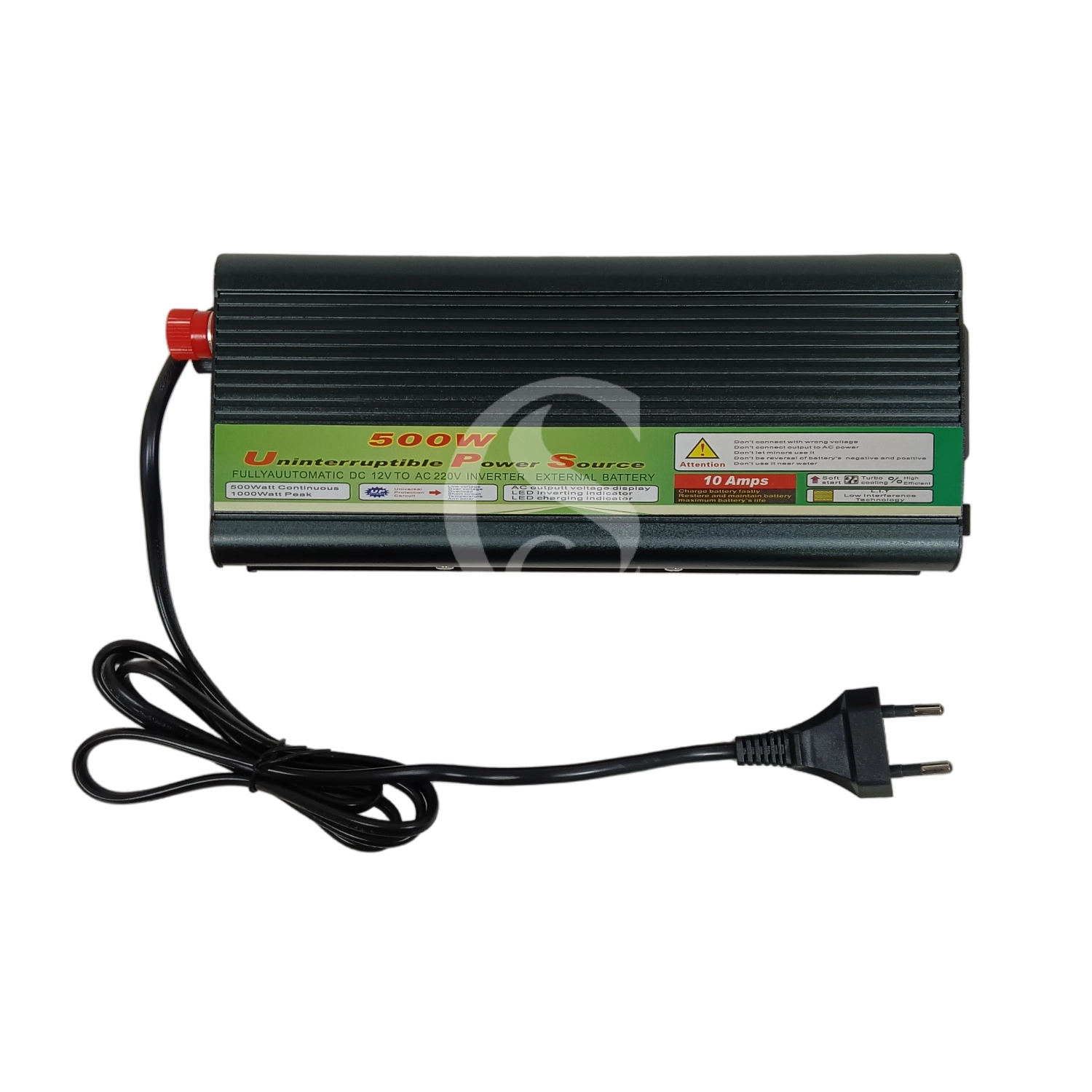
Congsin 500W 12V to 220V inverter delivers reliable off-grid power with its modified sine wave design. This portable 500W DC to AC power inverter efficiently converts 12V DC to 220V AC, ideal for outdoor and emergency use. Trust Congsin for stable, portable energy solutions.
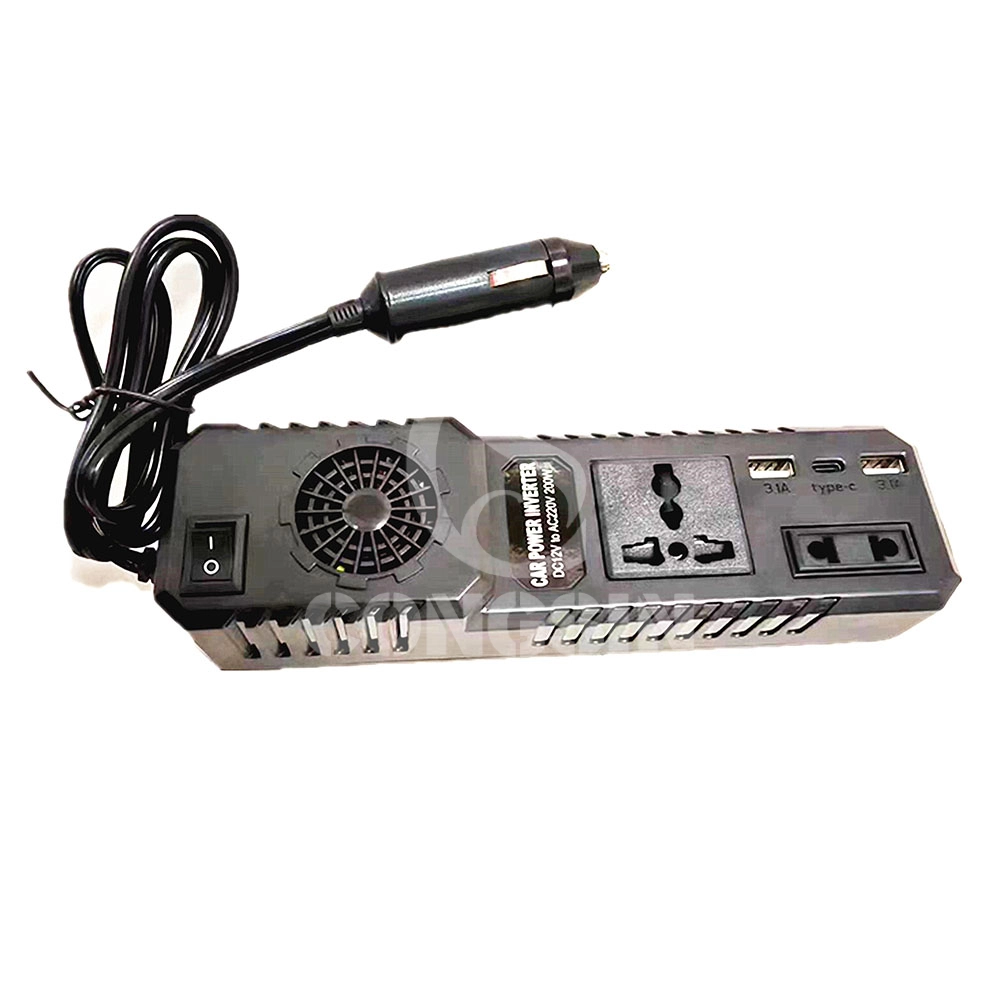
This 200W Modified Sine Wave Car Power Inverter is a compact and practical power conversion device designed for vehicle use. It supports dual input (DC12V/24V) and outputs AC220V, compatible with various electronic devices. Equipped with a Type-C port and dual 3.1A USB outputs, it can charge laptops, phones, cameras, drones, and other small electronics simultaneously—perfect for outdoor travel, emergency backup, and mobile work scenarios.
Get in Touch with Our Team
You can also communicate with us directly through our online contact form. Please fill in the following information, and our team will contact you as soon as possible after receiving your message.

CONGSIN is a trusted OEM factory for power inverters, solar charge controllers, and DC converters. Reliable solutions for global B2B buyers.
 High Quality
 7/24 Service
 Guaranteed Warranty
© 2025 Congsin. All Rights Reserved.
 WeChat
 Scan QR Code
sin cong
teaimei10
Whatsapp: +8618028086791
Scan QR Code